

Emirates launches new routes from Dubai to Da Nang and Siem Reap via Bangkok
Bangkok strengthens role as a regional hub linking Vietnam, Cambodia, and the UAE

DUBAI: UAE’s flagship carrier Emirates has expanded its East Asia footprint to 23 destinations with the introduction of two new routes via Bangkok – Da Nang in Vietnam and Siem Reap in Cambodia.
These launches reflect the airline’s growing focus on enhancing connectivity across Southeast Asia during a period of rising demand for travel and trade. Both flights mark a strategic milestone, building on Emirates’ long-standing presence in the region.
The inaugural flights were warmly welcomed, with Da Nang receiving its first Emirates service on 2 June, followed by Siem Reap on 3 June. Traditional water cannon salutes and receptions by dignitaries and airport officials celebrated the start of operations. Emirates’ leadership teams were present to inaugurate services at each destination.

The new flights operate with Emirates’ Boeing 777-300ER wide-body aircraft, featuring the airline’s award-winning onboard experience. Passengers benefit from seamless connectivity between Dubai, Bangkok, and onward to Da Nang or Siem Reap with a single ticket, accessing Emirates' vast global network.
Emirates expands in Southeast Asia
Nabil Sultan, Emirates’ Executive Vice President, Passenger Sales and Country Management, said: “Launching two new routes via Bangkok marks a significant milestone in strengthening Emirates’ presence in Southeast Asia and reinforces our long-standing commitment to Thailand as a strategic gateway to the region.”
The airline’s enhanced services allow travellers and businesses to capitalise on cross-border movement, especially with the convenience of multi-city itineraries involving Dubai, Bangkok, and the newly added Southeast Asian cities.
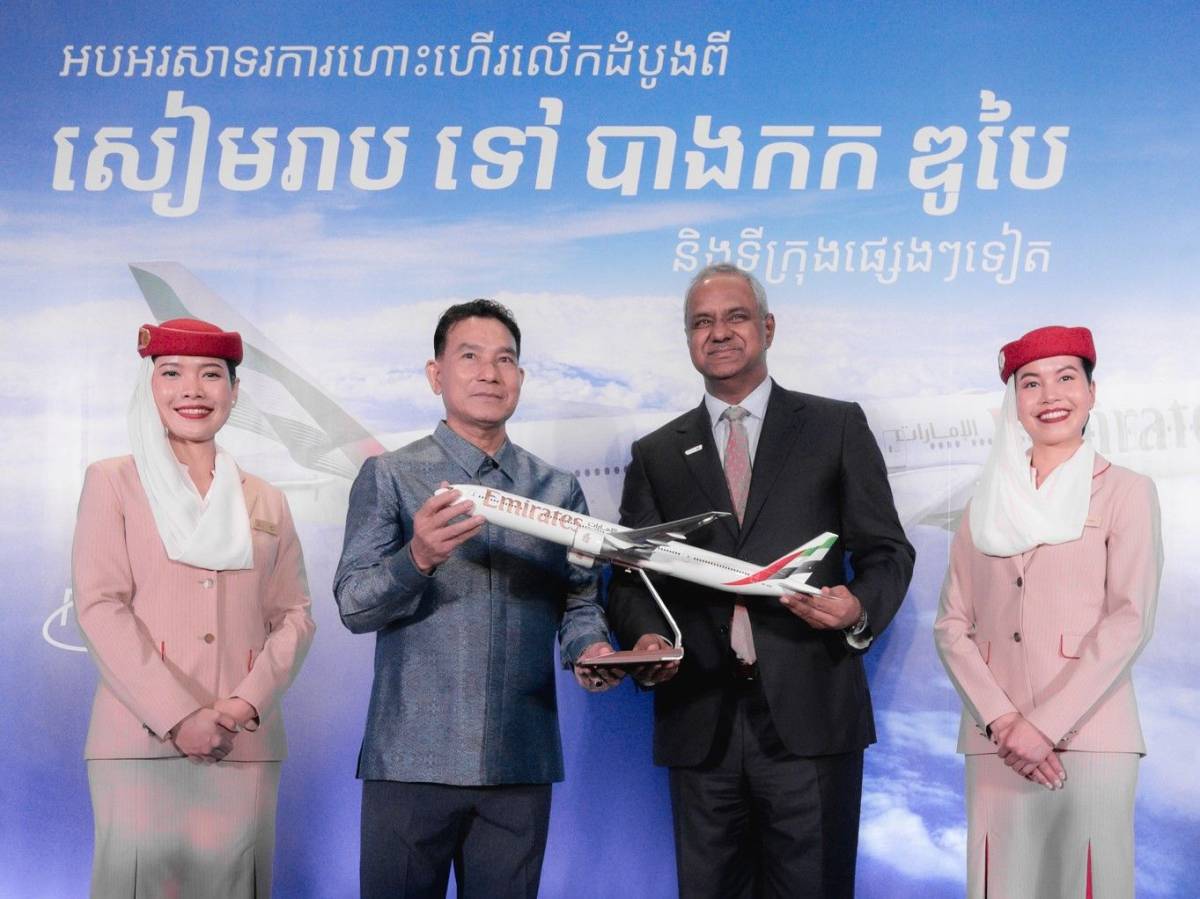
With Da Nang joining Hanoi and Ho Chi Minh City, Emirates now operates to three destinations in Vietnam. The airline operates 25 weekly flights into the country, bolstered by partnerships with Vietnam Airlines, VietJet, and Sun Group. These partnerships, solidified through memorandums of understanding, aim to further air connectivity and promote inbound tourism.
Da Nang also serves as a crucial cargo hub for electronics, textiles, and perishable goods – supporting trade between Vietnam and the UAE. Emirates SkyCargo will play a pivotal role in strengthening logistics ties under the broader UAE-Vietnam Comprehensive Economic Partnership Agreement (CEPA).
The new Dubai–Bangkok–Siem Reap route operates three times a week and complements the airline’s existing daily service to Phnom Penh via Singapore. Emirates now offers a total of 10 weekly flights into Cambodia, supporting both tourism and commercial links.
Cake-cutting ceremony
A celebratory cake-cutting event marked the twin route launches at Bangkok’s Suvarnabhumi Airport SAT-1 terminal, where Emirates recently unveiled its largest airport lounge outside Dubai. The ceremony was attended by Emirates’ official delegation, dignitaries, and airport executives, highlighting Bangkok’s pivotal position in the airline’s Southeast Asia network.

The airline’s regional expansion is underpinned by strong diplomatic relations, increasing traveller demand, and active cooperation with tourism authorities, governments, and airport partners.